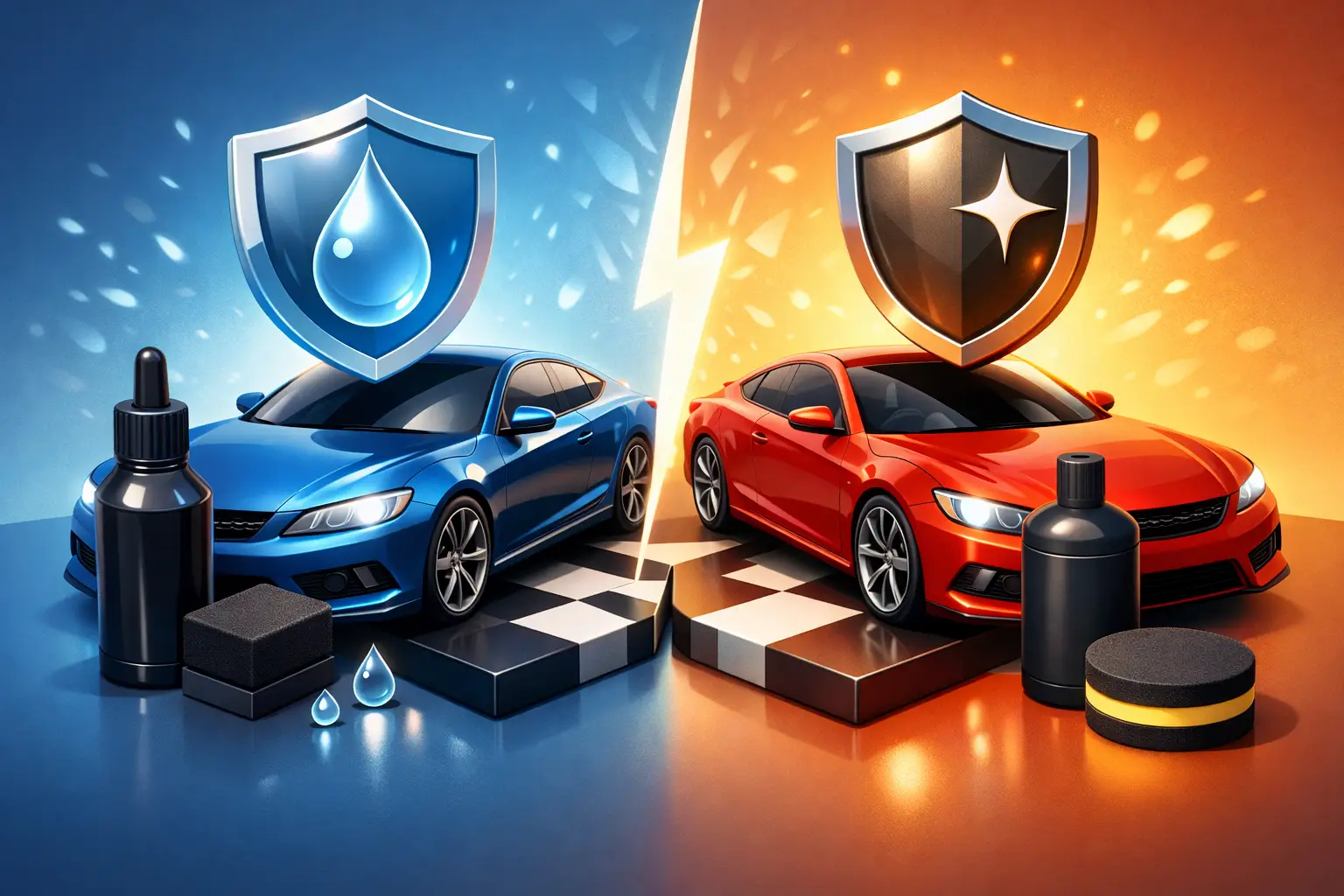
If you’ve ever been told your car “just needs some protection,” you’ve probably heard two very different solutions pitched as if they were basically the same. They are not. When comparing ceramic coating vs sealant, the real question is not which one sounds better – it’s which one fits how you drive, how long you keep your vehicle, and how much correction and maintenance you’re willing to invest in upfront.
For some owners, a quality paint sealant is the smart, practical choice. For others, ceramic coating is the better long-term investment because it delivers stronger durability, easier maintenance, and a more refined finish. The right answer depends on expectations, budget, and the current condition of the paint.
Ceramic coating vs sealant: what is the actual difference?
A paint sealant is a synthetic protective product applied to the exterior surfaces of a vehicle. Its job is to add gloss, improve water behavior, and create a sacrificial layer between the paint and the elements. It is typically quicker to apply and more affordable, but it also wears away faster.
A ceramic coating is a more advanced liquid protection that chemically bonds to the surface when properly installed. Once cured, it creates a harder, longer-lasting layer than a traditional sealant. That does not mean it makes the paint invincible, but it does mean better resistance to environmental fallout, wash-induced wear, and the constant abuse that daily drivers see in New England weather.
The biggest mistake people make is thinking both options offer the same result with different marketing. They don’t. A sealant can make a car look great and stay protected for a period of time. A ceramic coating is built for a different level of longevity and performance.
How each option performs in the real world
On paper, durability is the easy headline. In practice, durability only matters if the product is installed correctly and maintained properly.
A sealant usually lasts months, not years. That can be perfectly fine for someone who leases, trades vehicles often, or simply wants a lower-commitment protection option. If the car is washed regularly and the sealant is reapplied as needed, it can still do a solid job of preserving gloss and helping with routine cleanup.
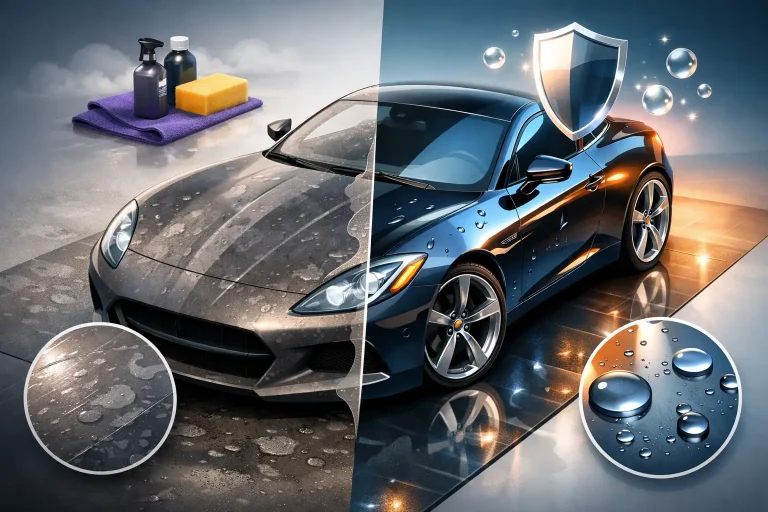
Ceramic coating is built for a longer ownership mindset. It offers more staying power through repeated washes, changing seasons, road grime, bird droppings, tree sap, and UV exposure. It also tends to make maintenance easier because dirt and water have a harder time clinging to the surface.
That said, ceramic coating is not maintenance-free. It still needs proper washing, periodic inspection, and good habits. If a car goes through harsh automatic washes every week, even a premium coating will not perform at its best for as long as it should.
Appearance matters, but prep matters more
Both ceramic coating and sealant can improve gloss. Where they differ is consistency, clarity, and how much they reveal about the paint underneath.
A sealant can add slickness and shine quickly. On a vehicle with decent paint, that may be all the owner wants. It freshens the finish and gives the surface a cleaner, brighter look without requiring the same level of investment.
Ceramic coating tends to give paint a sharper, more defined appearance, especially when paired with proper machine polishing beforehand. That is the key detail many people miss. Coating does not hide defects. It locks in the condition of the paint underneath. If swirl marks, haze, oxidation, or light scratching are already present, those flaws do not disappear because a coating goes on top.
That is why professional prep matters so much. Before coating, the surface should be thoroughly decontaminated and, when needed, corrected. Otherwise, you are preserving imperfections instead of preserving a refined finish.
Cost is different, and so is value
If you’re deciding on ceramic coating vs sealant based only on price, sealant will almost always look more attractive at first. It costs less upfront because the process is simpler, the product is less specialized, and the labor is usually lower.
Ceramic coating costs more because the service typically includes more than the coating itself. Proper washing, chemical decontamination, clay treatment, paint evaluation, and polish work all affect the final result. The coating application is only one part of the process.
The better way to look at value is over time. If a vehicle will be kept for several years, sees frequent use, or matters for resale and presentation, the higher upfront cost of ceramic coating can make financial sense. If a vehicle is temporary, older, or not a candidate for heavier prep work, a sealant may be the more reasonable choice.
Neither option is automatically a waste or an upgrade. The better option is the one that matches the vehicle and the owner’s goals.
Which one is better for daily drivers?
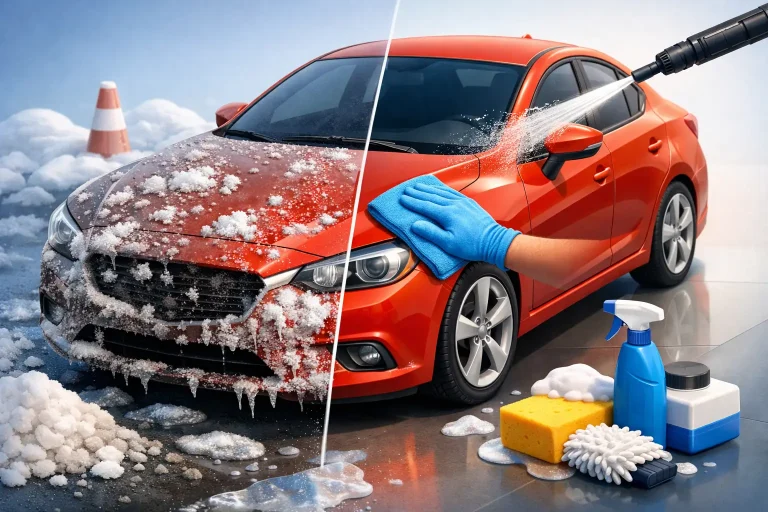
For many daily drivers, ceramic coating earns its reputation because it makes ownership easier. Road film releases more easily during washes. Water behavior is stronger. The finish tends to stay cleaner between services. If your car lives outside, handles highway miles, or sees snow, salt, rain, and pollen, the extra durability can be a real benefit.
Still, not every daily driver needs a coating. If the vehicle is older, the paint has significant wear, or the owner prefers a lower-cost maintenance plan, a sealant can still provide meaningful protection. In some cases, it is the more sensible route because it avoids overinvesting in a vehicle that simply needs practical care.
This is where honest recommendations matter. A premium service should not mean pushing the most expensive option every time. It should mean matching the protection system to the vehicle, the condition, and the customer’s expectations.
Ceramic coating vs sealant for luxury and enthusiast vehicles
On higher-end vehicles, ceramic coating often makes more sense because owners tend to care more about finish quality, long-term preservation, and easier maintenance. When paint correction is part of the process, coating becomes a strong finishing step because it helps preserve the work that went into refining the paint.
For enthusiasts, the difference is also about consistency. A coated vehicle is easier to keep looking sharp between details, especially when washed correctly. That matters if you notice every water spot, every patch of bonded contamination, and every loss of gloss.
A sealant still has a place here, especially for owners who enjoy frequent hands-on maintenance or want seasonal protection without a larger commitment. But if the goal is premium, long-lasting paint care, coating usually wins.
When a sealant is the smarter choice
There is no reason to force ceramic coating onto every vehicle. A sealant is often the better fit when budget is tight, the vehicle will be sold soon, or the owner wants protection without committing to correction and a more involved installation.
It also makes sense for people who are realistic about how they care for their car. If maintenance will be inconsistent, a sealant can be a more forgiving starting point. It gives visible improvement and real protection at a lower entry point.
For some families and busy professionals, that balance is exactly right. They want the car to look better, stay cleaner, and have some defense against the elements, but they are not looking for a multi-year protection plan. That is a valid decision.
What to ask before choosing either one
Before you decide, ask a few practical questions. How long are you keeping the vehicle? Is the paint already in good condition, or does it need correction first? Do you park outside year-round? Do you want the lowest upfront cost, or do you want longer-term protection with less frequent reapplication?
Also ask how the product will be installed. The quality of prep work, surface decontamination, polishing, and application standards matters as much as the label on the bottle. A professionally installed protection package should come with clear expectations, not vague promises.
That is one reason customers choose providers like SPS Auto Detailing. Certification, process discipline, and transparency matter when the goal is not just temporary shine, but a finish that holds up and a service experience you can trust.
So which one should you choose?
If you want affordable protection, decent durability, and a cleaner-looking finish without a major upfront investment, sealant is a solid option. If you want stronger long-term protection, easier maintenance, and a higher-end result that starts with proper paint prep, ceramic coating is the better choice.
The best decision usually comes down to ownership habits, not hype. A well-maintained sealant will outperform a neglected coating, and a properly installed coating will outperform a quick, low-prep shortcut every time.
Good paint protection should fit your vehicle and your life. If you’re not sure which path makes sense, the right detailer should be able to look at your car, explain the trade-offs clearly, and recommend what serves you best – not just what sounds impressive.